COMM 107 – Terrorism in Journalism

Course Description
How do media outlets in Middle East represent Islamist terrorism? How do they describe, analyze, and comment on suicide attacks? Focus on Arab, Afghan, and Iranian media discussions of this phenomenon to explore evolution of meaning of terrorism in Muslim societies. P/NP or letter grading.
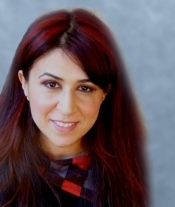
About Nushin Arbabzadah
I have graduate degrees from Hamburg University in Germany and Cambridge University in England, where I was one of the first William H. Gates Scholars. Before completing high school in Germany, I grew up during the Soviet war in Afghanistan, which gave me a lifelong concern for understanding conflict. Through being educated in three countries and four languages, I developed my interests in intercultural communication. After graduating from Cambridge, I worked for the British Council, overseeing international media projects involving journalists, TV presenters and writers from across the Middle East and Asia. I later joined the BBC, where I worked for several years analyzing the Afghan, Iranian and European media. I am a trained linguist and have translated professionally from Persian, German and Spanish and also understand Pashto, French and some other languages. My book, Afghan Rumor Bazaar: Secret Sub-cultures, Hidden Worlds and the Everyday Life of the Absurd is a study of new media and youth cultures of contemporary Afghanistan. Professor Brian Glyn Williams (University of Massachusetts, Dartmouth) described it as “invaluable and groundbreaking” in a review in Central Asian Survey. I have also translated the autobiography of the Iranian journalist Houshang Asadi and edited several books on the representation of minorities; literature and transnationalism; and Middle Eastern youth journalism. I am a regular writer for The Guardian, Huffington Post and have recently begun writing for Al-Jazeera America. I am currently writing a book on women’s education between Asia and the West.